In screw air compressors, the oil separator element is considered the "kidney" of the equipment—it finely separates oil and gas in compressed air, achieving an oil
content as low as ≤5 ppm in the separated gas.
Oil separator elements need regular replacement, but many operators only focus on sealing during replacement, neglecting a crucial check—static electricity
(conductivity) testing.
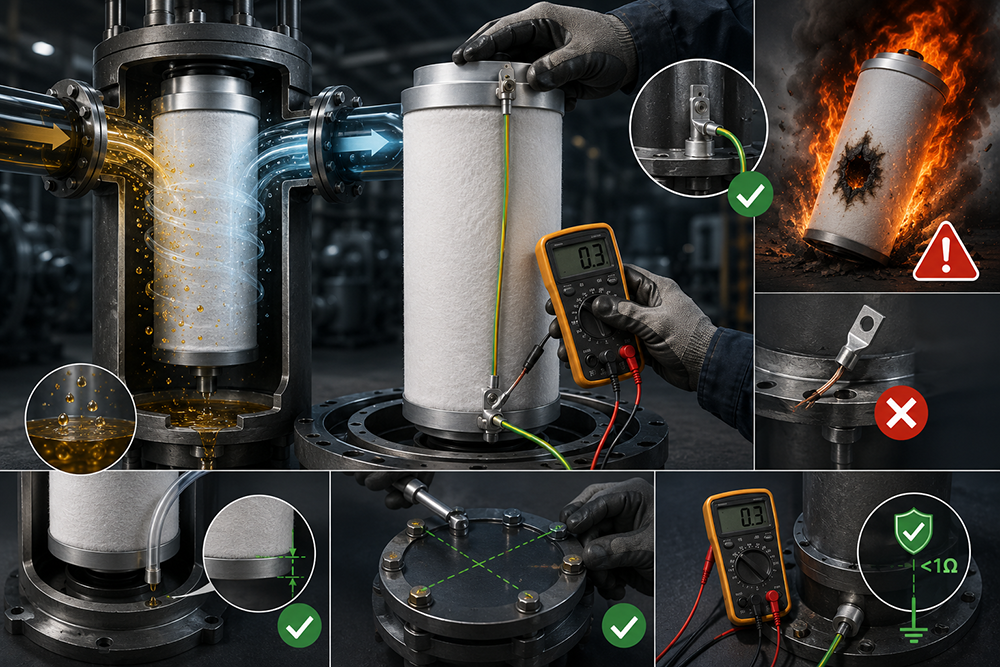
During operation, the oil separator element easily generates static electricity due to friction from high-speed airflow. not discharged promptly, static electricity
accumulation can ignite sparks, causing filter media burn-through, or even an oil separator explosion! Such accidents occur frequently in the industry.
Correct Operation: Before installing a new oil separator element, ensure its static electricity conductive device (such a metal sheet or copper wire) is intact and
reliably in contact with the casing; after installation, use a multimeter to measure the resistance between the oil separator element flange and the oil-gas separator
grounding point; it should be less than 1Ω; never use products with damaged or detached static electricity conductive components.
Other Precautions: The oil return pipe should be inserted 2-3mm from the bottom of the filter element to ensure smooth oil return; tighten the bolts on the casing
cover evenly at the diagonals.
Safety is paramount; prevention is better than cure. A simple conductivity test could avert a major accident.







 English
 Русский
 Español
 China
China Bahasa Indonesia
 Tiếng Việt
 ไทย
ไทย Français
 Deutsch